
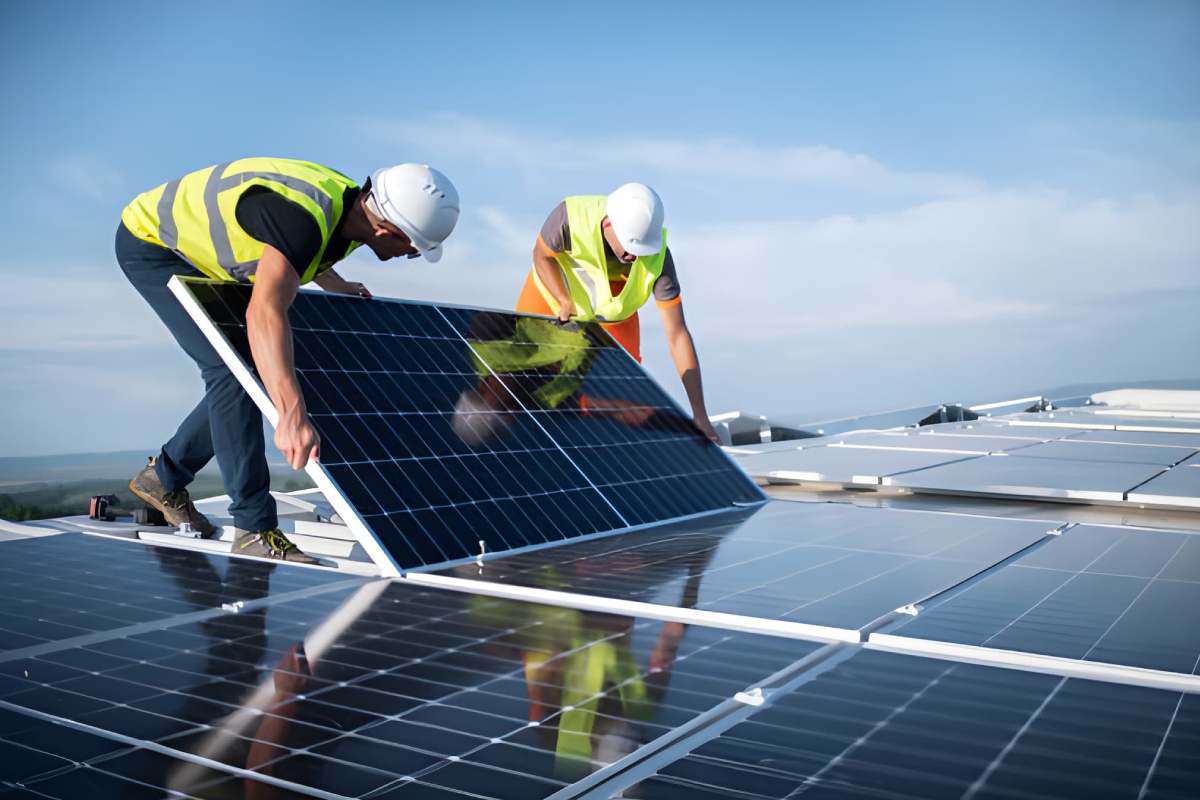
Rising energy values continue to put pressure on businesses across the UK. Whether you run a small office, a retail store, or a large industrial facility, electricity represents a significant and often unpredictable expense. Installing solar panels offers a practical way to regain control over energy costs while strengthening your long-term financial position. But how exactly do solar panels help businesses save money? And what can you expect from installing solar panels at your company?
Lower Electricity Bills From Day One
The most obvious way to save money with solar panels is by reducing the amount of electricity you buy from the grid. Once installed, your system generates electricity during daylight hours, which you can use directly to power your business. Every unit of solar energy you use is a unit you don’t need to buy from your supplier.
For businesses with consistent energy consumption throughout the day, such as offices, warehouses, factories, or retail stores, on-site solar generation is ideally suited to their daily energy needs. This allows for increased self-consumption and significant savings from day one.
As grid electricity prices rise over time, the value of each unit of self-generated energy increases, further enhancing the financial viability of your system.
Protection From Energy Price Volatility
Energy markets are becoming increasingly unpredictable. Fluctuations in wholesale prices, geopolitical pressures, and changes in legislation can unexpectedly impact your electricity costs. Solar panels help mitigate these risks by allowing you to generate a portion of your own energy.
While you may still depend on the grid at certain times, solar power generation provides a stable, long-term energy source without fuel costs. This predictability facilitates more accurate financial and budgetary planning, especially for businesses operating on tight margins or with long-term contracts.
Over the entire lifespan of a solar system, which typically lasts 25 years or more, this protection can lead to significant savings.
Attractive Returns On Investment
Solar panels are an investment, but they often yield significant financial returns. Technological advancements and decreasing installation costs have significantly increased their accessibility. In many cases, businesses recoup their investment within 5 to 8 years, after which the electricity generated becomes virtually free.
Beyond direct savings on electricity bills, solar installations can improve cash flow. After the initial costs are recovered, reduced energy expenses free up capital for reinvestment in other areas of the business.
Numerous financing options, such as power purchase agreements and leasing, enable businesses to benefit from solar energy without a significant upfront investment, making the technology accessible to a wider range of organisations.
Income From Surplus Energy
If your commercial solar panels generate more electricity than you consume, you can export the surplus to the national grid. Thanks to programs like the Smart Transfer Guarantee (SEG), you will receive payments for each unit exported, creating an additional source of income.
While export payments alone are unlikely to justify the installation, they improve the system’s overall profitability and ensure that energy is not wasted. Export revenues can help offset maintenance costs and further reduce the payback period.
Reduced Maintenance And Operating Costs
Solar panels are known for their reliability and low maintenance costs. Because they have no moving parts, the systems experience minimal wear and tear. Regular inspections and periodic cleaning are usually sufficient to maintain their performance.
This contrasts sharply with many traditional energy systems, which require constant fuel purchases and frequent maintenance. Reduced operating costs directly contribute to long-term savings and reduce the administrative burden of managing energy consumption.
Furthermore, modern monitoring systems enable real-time performance tracking, helping identify problems early and optimise energy consumption.
Tax Benefits And Financial Incentives
Installing solar panels can provide additional financial benefits through tax credits and subsidies. Investment deductions allow you to offset the cost of the system against taxable income, increasing the project’s viability.
In some cases, depending on the size and intensity of system use, installing solar panels may also reduce municipal taxes. While subsidy conditions may change over time, they generally increase the overall return on investment and accelerate the payback period.
Consulting with financial and tax advisors will help you take full advantage of all the benefits available to your business.
A Strategic Approach To Energy Savings
Solar panels help businesses save money by reducing electricity bills, stabilising energy costs, generating additional revenue, and achieving high long-term profitability. They transform energy from a variable expense into a manageable asset, contributing to financial stability in an unstable market.
By investing in solar energy, you are taking a proactive step to reduce costs, increase predictability, and ensure the sustainability of your business.